
Practicing Flight Forward

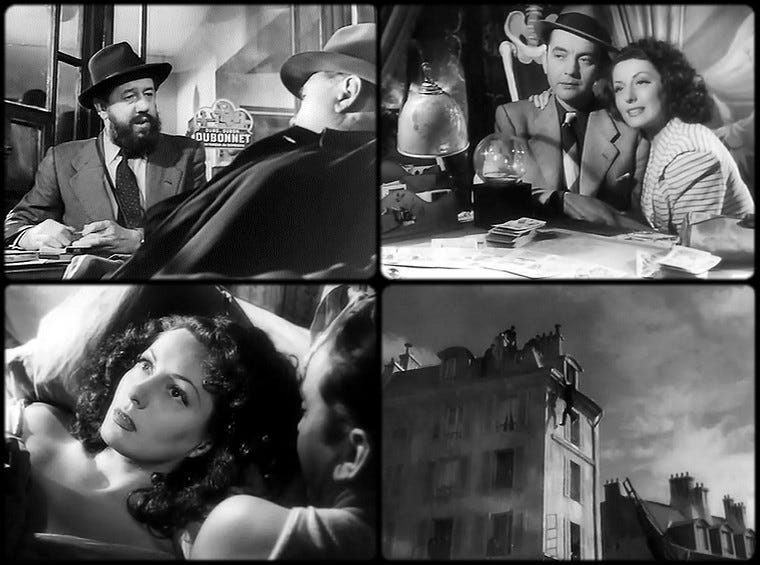
I’ve been on a Georges Simenon kick. Within the last week, I’ve watched La Tête d’un Homme and Panique, two films based on his novels. Tonight I’ll watch another, Magnet of Doom.
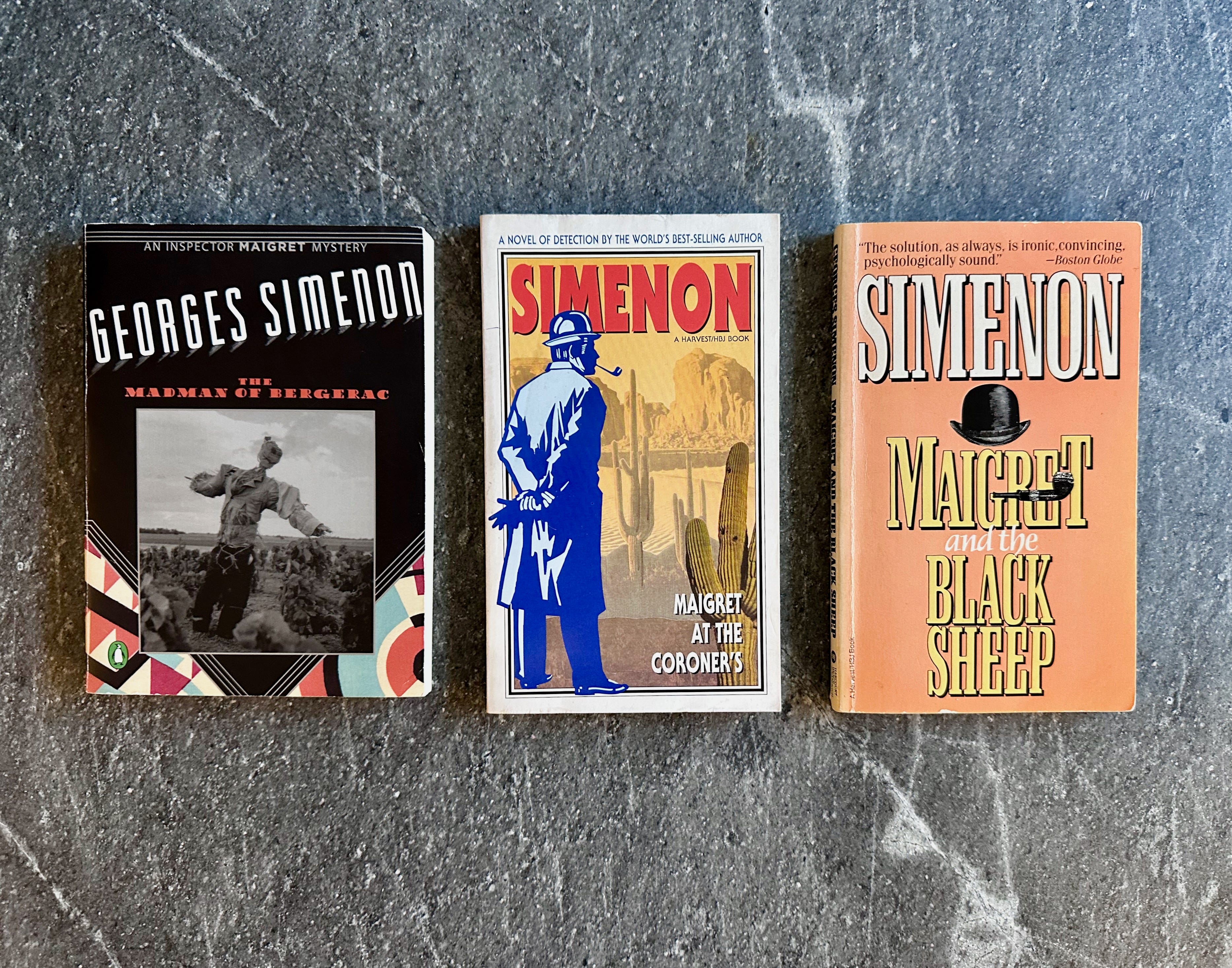
This started after I found three cheap Maigret paperbacks at a used bookstore in Toronto. It occurred to me that I’ve quickly read every Simenon I picked up, so I bought them all. I finished The Madman of Bergerac within a couple days.
There is a subtle urgency to Simenon’s writing that makes me keep turning the page. I wanted to learn how to capture that in my writing. I looked into what Simenon said about his technique and wanted to emulate it and to share what I found.
Georges Simenon wrote about 200 novels under his name and another 200 published under pseudonyms. Detective stories and psychological novels of gritty realism. Most of them are less than 200 pages. He spent months developing a few characters in his head and filing those ideas in manila envelopes. He decided on an atmosphere and a problem. Then he shut himself in a room for two weeks. He forced himself to write one chapter a day, about 5,000 words. If he went two days without a chapter, he abandoned the entire novel. He claimed most of the books were written in eleven days or less.
This reminded me of a very different writer. The Argentine César Aira, 74, has published more than 100 short novels and continues to publish at an astonishing rate. His books are known for their surreal twists or abrupt changes in the plot. I recommended him as the cure for pandemic malaise.
Aira calls his style la huida hacia adelante (or flight forward). He writes in cafes in the morning and says he never goes back to change, correct, or edit. He’s always pushing the story forward. Simenon said he only went back to remove words and simplify.
Both Simenon and Aira improvise. They don’t know where they’re going. They don’t outline. I assume that while they write, they’re solving the problems I’m suffering from: I’ve been at a loss for plot for 20 years and I am always hesitating.
Looking for a way to practice what these two have in common, I set up a dash exercise. ( I set myself 25 minutes to write without stopping. I find some inspiration in my notebook or from obits. Often it’s a phrase that I’m happy to misinterpret.
Then I open the notes app on my computer, make the window tiny, and drag it to the corner to block out as much of my writing as possible. I try not to stop. If I catch myself hesitating, I try to escalate the story. I haven’t learned how to acheive those bizarre Aira twists yet. But I can get about 500 words in 25 minutes.

Optimistically, I’ve set up a plan for longer blocks in the future and I hope I find that time to write. But Aira’s routine is more achievable for me than locking myself away for two weeks like Simenon.
Last week, I wrote that a Murakami story about a monkey had stuck with me for five years. So for now, I am embracing weirdness. I’ve got a story about a teenager who wakes up with her clothes stuck to her body and another about a man who makes someone eat an envelope. A great start.
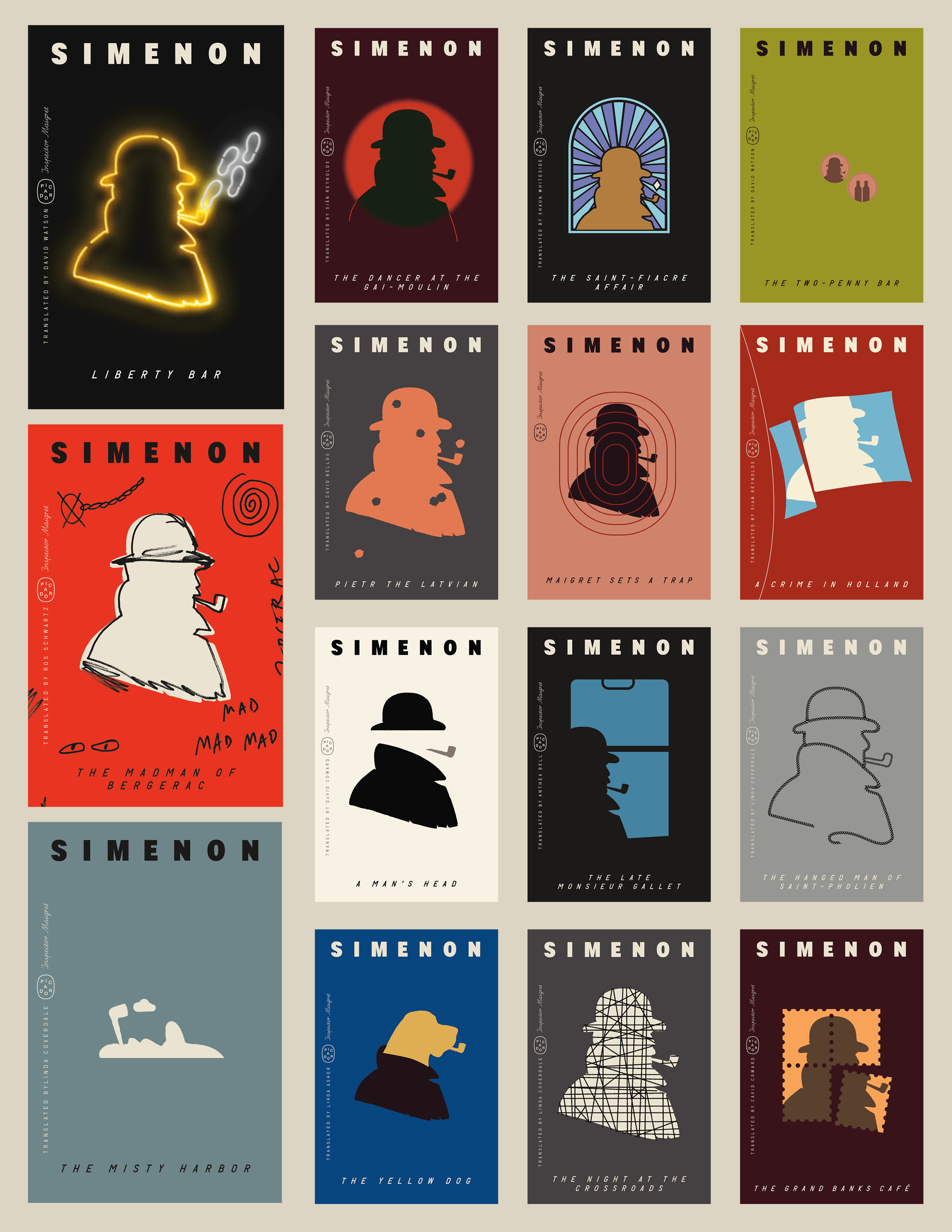
Have you read Simenon or Aira? Do you have any favorites of theirs? While researching Simenon, I learned that more than 100 of his novels will be reissued by Picador this year. New book covers below.
Additional stills from Julien Duvivier’s 1947 film Panique, adapted from Simenon’s Les Fiançailles de M. Hire


